Furniture longevity & responsible care
Choosing John Derian Seating for Long-Term Use
A memorable silhouette may catch your eye first. But when a sofa or chair is meant to live through years of everyday life, the less flashy details matter just as much: what supports the frame, how the upholstery will wear, and whether the parts that eventually need attention can be repaired instead of replaced.
John Derian seating by Cisco Home brings distinctive shapes into the conversation. A circular sofa can make a room feel instantly more personal; a compact loveseat can turn an overlooked corner into a useful place to sit. The long-term question is how that character holds up after dinner parties, quiet evenings, sunlit afternoons and the occasional spill. Looking closely at materials and maintenance helps transform an exciting design choice into a more considered one.
Start with the frame, not just the first impression
Upholstery and shape are easy to notice. A frame is not, which is precisely why it deserves attention before a purchase. The frame is the underlying structure that carries weight and helps a sofa keep its form through daily use. A well-made appearance alone cannot tell you everything about how that structure is built, so look for clear specifications rather than relying on broad descriptions such as “premium” or “built to last.”
Several John Derian seating pieces listed by Cisco Home describe frames made from FSC-certified hardwood. Forest Stewardship Council certification concerns the sourcing and management of forest materials; it is a useful piece of information about wood sourcing, but it is not a guarantee that a sofa will last a particular number of years. Durability also depends on design, construction, use, maintenance and the availability of repairs.
For example, the John Derian Penny Sofa is described as having an FSC-certified hardwood frame and an eight-way hand-tied support system. Its circular form can be split into two pieces for alternate seating arrangements, giving the design a practical dimension as well as a distinctive one. Those construction details are worth discussing with the seller: ask what the support system means for service, whether components can be accessed for repair, and what maintenance is recommended.
Do not treat any single feature as a shortcut to certainty. Hardwood is not a promise of indestructibility, and a named suspension system does not eliminate normal wear. Instead, use construction information as the start of a more useful conversation. Ask about the frame’s joinery, the support system, the warranty, and the process for addressing a loose joint or damaged support. Specific answers make it easier to understand what ownership could involve.
Understand the support beneath the seat
Suspension is the structure between the frame and the cushions. It helps distribute weight and contributes to the way a seat feels. The Penny Sofa’s listed eight-way hand-tied construction is one example of a clearly identified support detail. Another John Derian design, the Dromedary Sofa, is also described as using eight-way hand-tied support. Knowing a system’s name is helpful, but it is only part of the assessment.
Try the seat if you can. Sit down in the way you normally would, then notice whether the cushion feels supportive, whether the seat gives evenly, and whether getting up feels comfortable. Test more than one position. A sofa may feel inviting for a short showroom visit but less suitable if you plan to read, work or spend long stretches watching television on it. Comfort is personal, and the most durable option on paper is not a good fit if it does not suit the people who will use it.
Ask how the seat is expected to change with use. Some settling is normal, and cushions may need regular rotation or reshaping, depending on their construction. Find out whether the cushions are loose or attached, whether their covers can be removed, and whether replacement or refurbishment is possible. These details matter because a worn cushion does not necessarily mean the entire seating piece has reached the end of its useful life.
When shopping remotely, request the complete specification and clarify any confusing dimensions or construction terms. Product descriptions can vary in detail, and measurements may refer to overall size, usable seating area or both. A careful review now can prevent a costly mismatch later—and gives you a record of the materials and features you chose.
Choose upholstery for the household you have
Fabric choice shapes the look of a sofa, but it also influences everyday care. A pale, delicate textile may be beautiful in a low-traffic room and stressful in a lively family space. A textured fabric may disguise some everyday variation while collecting lint or crumbs in its weave. There is no universally perfect upholstery: the sensible choice depends on the people, pets, routines and light conditions in your home.
Before selecting a fabric, ask for its care instructions and any available performance information. Find out how to respond to spills, whether professional cleaning is recommended, and whether cleaning methods could affect the color or texture. Do not assume that a fabric described as durable can be cleaned with any household product. When in doubt, follow the manufacturer’s guidance and test an approved method in an inconspicuous area.
Color also affects how a piece lives in a room. Direct sunlight can contribute to fading over time, so think about window placement and whether curtains or shades will help limit exposure. If the sofa will sit beside a frequently used dining area, consider whether its upholstery will need more regular attention than a piece in a formal sitting room. A realistic match between fabric and use is more sustainable than choosing a high-maintenance material you will quickly resent.
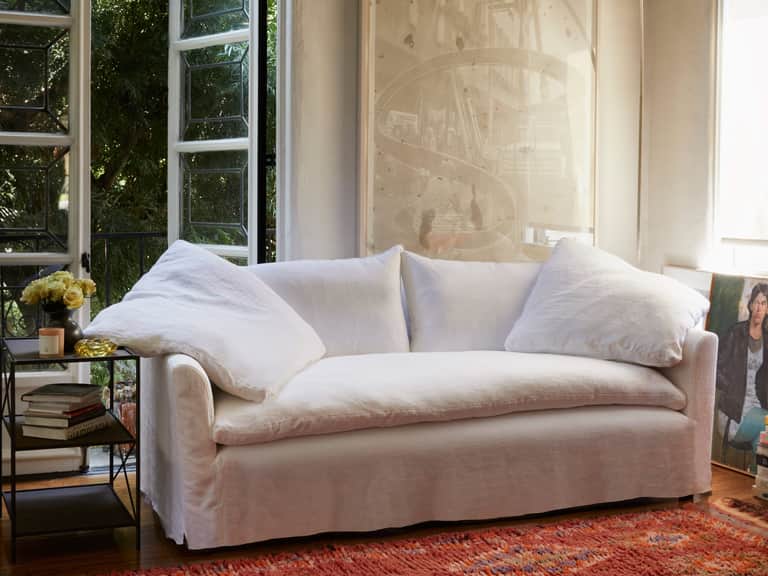
Customization can be useful when it helps a piece fit your setting and habits. Cisco Home’s listed John Derian Dromedary Sofa offers upholstery and slipcover options, as well as customization. A slipcover may make certain kinds of routine care more practical, but its presence does not automatically mean it can be machine-washed or easily replaced. Confirm the care method, whether the cover is removable, and whether a replacement can be ordered if it eventually wears out.
Keep the fabric information after delivery. Record the upholstery name or code, care instructions and date of purchase, and retain any order documents. If you need a repair or a matching panel later, this small bit of household record-keeping can save time and make a repair conversation much more productive.
Look at a distinctive shape through a practical lens
John Derian seating can be compelling because it does not always follow the familiar outline of a conventional sofa. The Penny Sofa’s circular design is a conversation starter, while the John Derian Coin Half Sofa is described as a half-circle intended to sit against a short wall. The Coin Sofa has a circular profile, and its product description notes that it can serve as a centerpiece in a larger seating area. These are more than aesthetic distinctions: each form affects how a room can be arranged.
Measure carefully before choosing a sculptural piece. Check doorways, staircases, lifts and turns on the route to the room, not only the space where the furniture will sit. Then mark the full footprint with painter’s tape or a similar removable guide. Leave room for walking paths, other furniture and the way people will approach the seats. A striking sofa that blocks a doorway or overwhelms a small room may be used less often than you imagined.
Flexibility can support longevity. If the arrangement can be separated, repositioned or adapted as your needs change, it may be easier to keep the piece when you move or reorganize. But flexibility should be confirmed in the product information rather than assumed from appearance. Ask whether separate elements connect securely, how they should be moved, and whether there are limits to possible configurations.
Think, too, about whether the design can live with changing surroundings. A shape that works only with one precise layout could become difficult to accommodate after a move. That does not mean avoiding expressive design. It means making sure the expression has enough room to grow with you.
Repairability is part of the sustainability story
Long-term use is not simply a matter of buying a sturdy sofa and hoping for the best. It also depends on what happens when the fabric wears, a cushion loses shape, a seam opens or a support needs attention. A design that can be maintained or repaired has more chances to remain useful than one whose worn components cannot be addressed.
Before committing, ask whether the seat and back cushions are replaceable, whether covers can be recovered, and whether upholstery can be renewed without rebuilding the whole piece. Ask how repairs are arranged and whether replacement parts or service are available. Get clear about what is covered by the warranty and what counts as normal wear. Policies can differ, and the answers are more valuable when they are specific.
Reupholstery can be a practical way to extend a sofa’s life when the frame and support remain in good condition. It is not automatically the least expensive option, and the feasibility depends on construction, labor, materials and the condition of the furniture. Still, considering the possibility before purchase changes the question from “Will this look new forever?” to “Can I care for this as it changes?” That is a more realistic—and more sustainable—standard.
A cover that can be cleaned or replaced may help address surface wear, while a cushion that can be serviced may help preserve comfort. Neither feature is useful if the owner does not know how to maintain it. Request care documentation and keep it where you can find it. A short, occasional check for loose legs, seams or hardware can also help catch small concerns before they become harder to resolve.
Choosing repair instead of replacement can reduce waste, but the right decision depends on the item’s condition and the resources required. Responsible consumption is not about keeping every piece regardless of safety or function. It is about making thoughtful choices, caring for what can be maintained, and seeking suitable reuse or recycling options when an item truly reaches the end of its useful life.
Build an easy care routine
Everyday habits can help preserve both the appearance and comfort of upholstered seating. Vacuum gently with an appropriate attachment to remove dust and crumbs from the seat, seams and crevices. Blot spills promptly with a clean cloth rather than rubbing them deeper into the material. Use only cleaning methods approved for the specific upholstery, and avoid improvised treatments that might leave marks or damage the finish.
Rotate or reshape loose cushions when the manufacturer recommends it. If cushions are not interchangeable, ask whether they should be turned or simply fluffed. Keep sharp objects away from upholstery and take care not to overload an arm or seat in ways the furniture was not designed to support. These are modest measures, but a consistent routine is often easier than trying to reverse years of neglect all at once.
Placement plays a role, too. Strong sunlight, heat sources and persistent moisture can affect furniture materials. Allow a little breathing room around the piece and avoid placing it where spills are likely to go unnoticed. If a problem appears—such as a loose leg, torn seam or uneven support—consult the seller or a qualified repair professional before attempting a fix that might make the issue worse.
For households with children, pets or frequent guests, care starts with an honest assessment of daily life. Removable covers may make upkeep more manageable, while a less delicate fabric can lower the pressure to keep a sofa pristine. The goal is not to create a museum piece. It is to choose seating that can be comfortably used and realistically cared for.
A thoughtful buying checklist
When comparing John Derian furniture, give yourself permission to ask detailed questions. A distinctive design is a beginning, not the whole decision. Use this checklist to compare the information that will matter after the excitement of delivery day:
- Frame: What material is used, and what is known about its sourcing?
- Support: What suspension system is specified, and how can it be inspected or serviced?
- Cushions: Are they removable, reversible, replaceable or eligible for refurbishment?
- Upholstery: What are the care instructions, and is the chosen fabric suited to your household?
- Slipcover: Is it removable, how should it be cleaned, and can a replacement be ordered?
- Repairs: Who handles service, and what parts or repairs are available?
- Fit: Do the overall dimensions, seating area and delivery route work in your home?
- Documentation: Can you keep the fabric details, specifications, warranty and care guidance?
Comparing answers side by side can clarify which piece is likely to fit your priorities. One household may value an adaptable layout; another may care most about a washable cover or cushions that can be serviced. The best choice is not necessarily the one with the longest list of features. It is the one whose design, comfort, care requirements and repair options make sense for the way you live.
Make room for character—and for real life
Distinctive seating earns its place when it continues to work after the first impression fades. That means choosing a shape you genuinely enjoy, but also checking the hidden structure, understanding the upholstery and learning what maintenance will involve. For John Derian seating from Cisco Home, details such as FSC-certified hardwood frames, hand-tied support on select models, customization and slipcover options can help guide a more informed assessment. They are useful evidence to investigate, not substitutes for questions about repair and care.
Think of longevity as a relationship between furniture and its owners. The frame matters, but so does how the sofa is used. Fabric matters, but so does the room where it sits. Repair options matter, but so does preserving the information that helps a professional carry out that repair. No single specification can promise decades of service in every household.
With careful measuring, realistic upholstery choices and a plan for ordinary maintenance, a memorable seat can feel at home in daily life—not just in a design story. Ask the detailed questions before you buy, save the answers, and choose with the future in mind. That is how a beautiful piece can become a considered part of a home, rather than furniture that is quickly outgrown or discarded.