A thoughtful home guide
A Practical Guide to Choosing a Sustainable Cisco Home Sofa
A sofa is more than a handsome outline in a living room. It is the place where evenings unfold, guests settle in and everyday life leaves its mark. If you’re comparing Cisco Home sofas, look beyond the fabric swatch: frame materials, support, cleaning options and the possibility of repair all help shape how a sofa performs over time.
There’s no single “sustainable sofa” that suits every household. A responsible choice starts with the way you live, the room you have and the care you’re realistically willing to give. Here’s how to weigh those details—and what to look for in a sofa designed to be part of your home for more than a passing season.
Start with the household, not the showroom
Before comparing upholstery or cushion fills, picture the sofa in actual use. Will it be the family’s main lounging spot, a quieter place for reading, or an occasional seat in a formal living room? Do pets nap on it? Do children snack there? Is the household likely to move in a few years, or are you furnishing a long-term home? These questions may not feel glamorous, but they can prevent an expensive mismatch.
Daily routines affect what “durable” means. A household with frequent guests may need generous seating and resilient upholstery. A smaller apartment may call for a compact profile, removable legs for easier moving, or a shape that can be rearranged. If spills are a regular possibility, a sofa with a slipcover may be more practical than one that requires professional care for every mishap.
Then measure the space. Check the sofa’s overall width, depth and height, but also account for hallways, staircases, doorways and elevator access. A piece that fits beautifully on a floor plan can become a logistical puzzle at delivery. Note nearby tables, walkways and doors, and leave enough room for people to pass comfortably. Removable legs can help with access, but don’t assume they solve every delivery challenge; confirm the relevant dimensions before ordering.
Comfort deserves a real-world test, too. Seat height and depth influence how easy it is to sit down and stand up, while cushion construction affects whether the feel is firm, soft or somewhere in between. If possible, try the sofa in person. If that isn’t an option, use published specifications as a starting point and ask for clear guidance on the seat, back and cushion materials.
What an FSC-certified hardwood frame tells you
A sofa’s frame is its hidden foundation. The upholstery may catch the eye first, but the frame helps determine how the piece holds together through daily use. Several Cisco Home sofa descriptions specify an FSC-certified hardwood frame. FSC stands for the Forest Stewardship Council, an organization that sets standards for responsible forest management and chain-of-custody certification. Certification can offer useful information about the source of wood, but it is not a guarantee that every aspect of a finished sofa has the same environmental profile.
That distinction matters. “FSC-certified hardwood” describes a meaningful material attribute, not a complete life-cycle assessment. It does not, by itself, answer every question about upholstery, foam, adhesives, transportation, factory practices or end-of-life options. Treat it as one part of the picture, alongside construction details, care requirements and whether the sofa can be maintained or repaired.
Look for specifics rather than relying on broad claims. Is the frame identified as FSC-certified? Is the statement about the frame, or about the whole product? Are materials and construction details described clearly? If an environmental option or feature is mentioned, ask what it includes. The more precise the information, the easier it is to compare one sofa fairly with another.
A well-made frame can support longevity, but longevity still depends on use and care. Avoid assuming that hardwood automatically means indestructible. Furniture joints, fastening methods, support systems and the way a sofa is treated all contribute to performance. When purchasing, ask what parts can be serviced, what warranty applies and whether replacement components can be obtained. Those practical answers are often more useful than a general promise that a sofa is “built to last.”
Understand the support beneath the cushions
Support systems are easy to overlook because they’re not visible once the sofa is assembled. Yet they help determine how the seat feels and how it responds to repeated use. Cisco Home product descriptions include several types of support, such as webbing, soft-edge construction, no-sag support and 8-way hand-tied construction. These labels describe different approaches; they are not a simple ranking from best to worst.
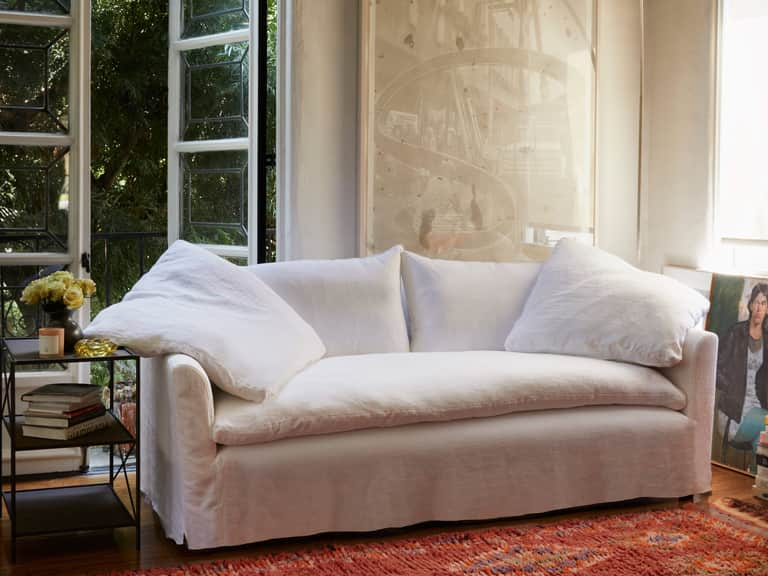
For example, the [Cisco Home Donato Sofa](/products/cisco-home-donato-sofa-361) is described as having an FSC-certified hardwood frame and 8-way hand-tied support. It also features a bench-topper seat cushion, two back cushions, removable legs and slipcover availability. Those details give a shopper useful points to investigate, but they cannot predict exactly how the sofa will feel in every home or how it will age under every routine.
Ask what the support system feels like, how it is maintained and whether it can be repaired if it wears. If you sit on the sofa in person, pay attention to whether the seat feels supportive across its full width, whether the cushions settle in a way you like and whether the back provides comfortable support. Test the sofa in the way you expect to use it—upright for conversation, relaxed for reading or stretched out for a movie.
Also consider cushion configuration. A bench seat has one continuous seat cushion, which can create a clean, uninterrupted look. Separate seat cushions may make it easier to rotate individual cushions, depending on their construction and care instructions. Neither arrangement is automatically more durable. The right question is how the design fits your household and what upkeep it requires.
Choose upholstery for the life you actually live
Fabric is where personal style meets practical reality. A delicate upholstery choice can be lovely in a quiet room, while a busy household may benefit from a fabric that is easier to maintain. Color, texture and pattern affect appearance, but care instructions matter just as much. Before committing, ask how the selected fabric should be cleaned, whether it can be professionally cleaned and how it may respond to routine wear, sunlight and spills.
There is no universal “best” sofa material. A tightly woven textile may suit one home, while another household may value a removable cover above all else. Some fabrics show lint, pet hair or water marks more readily than others. A pale color may brighten a room but require more attention; a darker shade can hide certain marks while showing dust or light-colored hairs. Request a fabric sample if available and look at it in the room’s actual lighting.
Slipcovers can make maintenance more manageable, but read the details carefully. “Slipcovered” does not automatically mean machine washable. Cleaning methods vary by fabric, and a cover may require professional care or careful handling. Ask whether the cover is removable, how it should be cleaned and whether replacement covers can be ordered later. If you expect to wash it, confirm the instructions before purchase rather than relying on assumptions.
Fabric quantity listed in a product specification is not a measure of environmental impact or durability. It can help indicate the amount of material used, but it does not tell you how long the fabric will last or how responsibly it was produced. For a more informed comparison, ask about the specific textile’s composition, cleaning guidance and relevant certifications, if any.
Consider how your upholstery choice might age. A fabric that looks perfect on day one should still feel like your style after the room changes. Timeless colors and patterns can make it easier to keep a sofa in use through redecorating, while replaceable covers can provide another route to refreshing its appearance. The most sustainable choice is not always the most neutral one—it is the one you can see yourself caring for and enjoying.
Removable parts can make ownership easier
When comparing sofas, notice which elements can be removed or replaced. Removable legs may simplify delivery, moving and certain kinds of maintenance. A slipcover can make cleaning more flexible and may allow a sofa’s appearance to change without replacing the entire piece. Loose cushions can sometimes be rotated, helping distribute everyday wear, though that depends on the cushion design.
Ask whether cushion covers unzip, whether the cushions can be replaced, and whether the manufacturer or retailer can supply repair parts. Find out whether the legs, support components or upholstery can be serviced locally. The answers may depend on the model, chosen fabric and availability, so it’s wise to get current details for the specific sofa you’re considering.
Repairability is a powerful part of furniture longevity. A damaged seam or tired cushion does not necessarily mean the entire sofa has reached the end of its useful life. If repairs are practical, they can extend use and avoid the cost and waste of an early replacement. But repair potential should be verified—not presumed. Ask what repair services are available, whether a local upholsterer can work on the construction and how replacement materials can be matched.
Even the best maintenance plan starts with simple habits. Follow the care label, vacuum upholstery with an appropriate attachment, address spills according to fabric instructions and keep the sofa away from prolonged, intense sunlight when possible. Rotate or reposition cushions only if the design allows it. Avoid harsh cleaners unless the manufacturer’s instructions specifically recommend them; an unsuitable product can damage a fabric or finish.
Match the sofa’s dimensions to the room
Scale is a sustainability issue as much as a design one. A sofa that overwhelms a room may be uncomfortable to live with; one that is too small may fail to serve the household and be replaced sooner. Measure the available wall or floor area, then mark out the sofa’s footprint with painter’s tape or a simple paper plan. Include the full depth, not just the width, and consider how the sofa interacts with coffee tables and circulation paths.
Think about seating capacity in practical terms. A long sofa may fit a larger room but leave little space for side tables or walking routes. A compact design may suit an apartment, but consider whether it can accommodate the people who use the room most often. If the sofa will be part of a larger seating arrangement, check the heights and proportions of nearby chairs and tables so the room feels comfortable rather than crowded.
Plan for the future, too. A sofa purchased for a first apartment may later move to a different room or home. A versatile profile, adaptable fabric and manageable dimensions can make that transition easier. If your household’s needs may change, ask whether the sofa is available in more than one width or configuration. Do not choose a larger model simply because it offers flexibility; buy the size that fits your current space and likely use.
A simple comparison checklist
Product descriptions can contain many appealing details, so it helps to compare candidates using the same questions. Keep notes for each model and verify any detail that could affect comfort, care or delivery.
- Frame: What material is used, and is any certification specified for the frame?
- Support: What type of support system is listed, and can it be serviced?
- Seat and back: What cushion arrangement is used, and does it suit your preferred feel?
- Upholstery: What is the fabric composition, and what are the cleaning instructions?
- Slipcover: Is one available, is it removable, and how must it be cared for?
- Repair: Can cushions, covers, legs or other parts be replaced or repaired?
- Fit: Do overall dimensions and delivery measurements work for your room and access route?
- Documentation: What warranty, care guidance and material information are provided?
A comparison like this keeps the decision grounded. A sofa may have an appealing design and responsible material features, but if its care requirements are unrealistic for your household, it may not be the right fit. Conversely, a straightforward model with removable covers and clear repair options may be a stronger long-term choice than a more elaborate piece that is difficult to maintain.
Sustainability is a series of practical choices
Responsible furniture decisions are rarely made with one label or one material alone. A sofa’s environmental story includes the materials, how it is made, how far it travels, how long it remains useful and what happens when it is no longer needed. Most shoppers won’t have a complete life-cycle analysis for every option, and that’s all right. Focus on the information that is available and ask clear questions where the details are missing.
Choosing a sofa that works for your space and routine can be a meaningful first step. A durable frame, suitable upholstery, repair options and manageable care may help you keep a piece in service longer. That does not mean every household needs the same type of sofa or must choose the most expensive option. It means resisting the pressure to buy on appearance alone and considering how the item will function beyond the first impression.
When a sofa eventually needs to leave your home, explore responsible next steps before treating it as waste. If it is clean, safe and usable, donation or resale may be possible. For a damaged piece, a local repair service, upholsterer or reuse organization may offer options. Disposal and recycling rules vary by area and by material, so check local guidance rather than assuming a sofa can go into ordinary recycling.
Above all, buy thoughtfully rather than aspirationally. Choose the dimensions, cushion feel and maintenance plan that make sense for the people who will use the sofa every day. A piece that fits your home, receives appropriate care and can be repaired when needed has a better chance of becoming a lasting part of it.
The bottom line
A sustainable Cisco Home sofa is not defined by one feature. FSC-certified hardwood, a considered support system, removable legs, slipcover availability and transparent care guidance can all help inform your decision, but each detail should be weighed against your own needs. Look closely at the construction, learn how the upholstery must be maintained, and ask what can be repaired or replaced.
Then imagine ordinary life: a quiet morning, a busy weekend, a spilled drink, a move across town. The sofa that makes sense is the one that can handle those realities, fits the room and feels comfortable enough to keep. Choosing with that fuller picture in mind turns a furniture purchase into a more considered investment in everyday living.